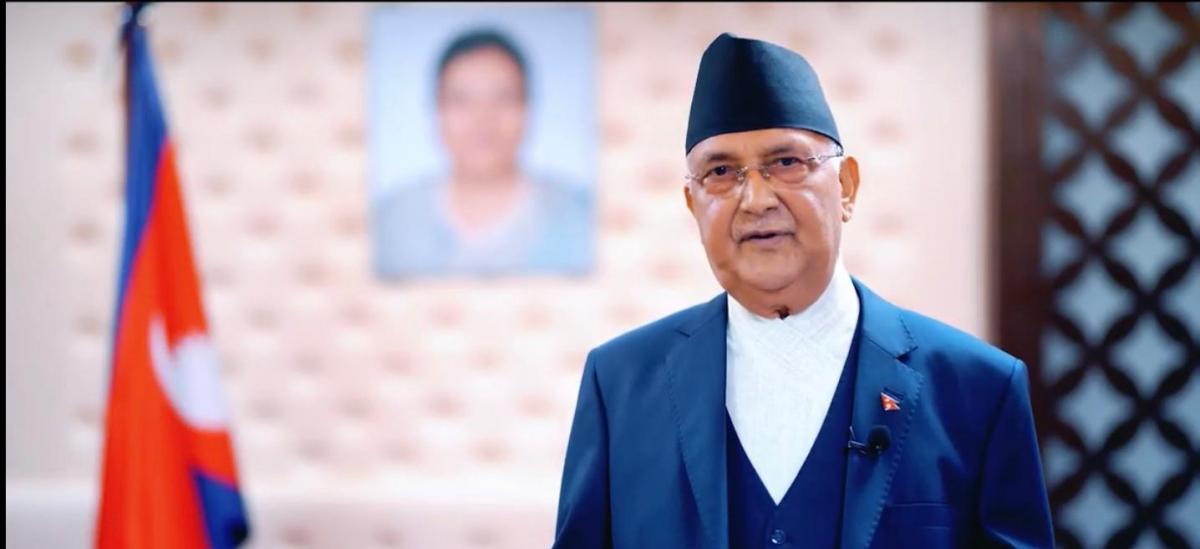
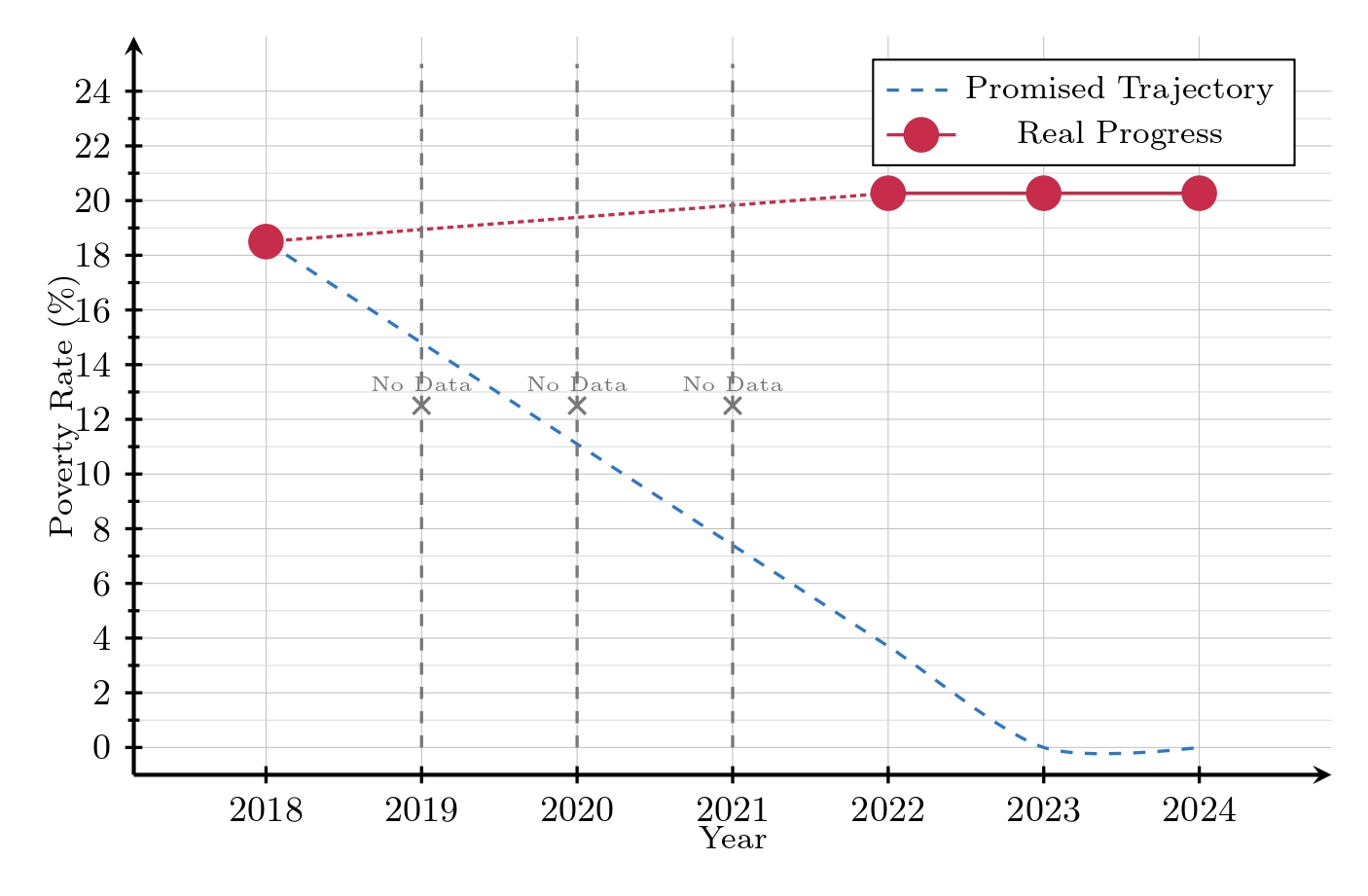
In September 2018, Prime Minister KP Sharma Oli pledged that poverty would be "completely eliminated" from Nepal within five years. The promise was repeated that December with the assurance that social security schemes would leave "no one poor in the country." Six years later, Nepal has released its most comprehensive poverty data in almost a decade. This fact check compares the pledge with what the official numbers now show.
Claim Tested
Statement: Poverty will be completely eliminated from Nepal within five years (2018–2023).
Finding: Not met. As of the 2024 NLSS-IV release, more than one in five Nepalis remain below the poverty line.
Key Findings at a Glance
- Official poverty rate: 20.27% of Nepalis remain below the poverty line (NLSS-IV, fielded mid-2022 to mid-2023; published June 2024).
- Regional concentration: Madhesh Province records the highest share of people living in poverty.
- Household coverage: NLSS-IV surveyed 9,600 households nationwide, making it Nepal’s gold standard poverty dataset.
- Multidimensional poverty: MPI 2024 finds 20.1% of Nepalis are multidimensionally poor, with a further 20.2% vulnerable—over 40% facing deprivation or high risk.
- Conclusion: The five-year eradication pledge has not been achieved; millions remain below income and multidimensional poverty thresholds.
What Was Promised
“Poverty will be completely eliminated from Nepal within the next five years.” — Prime Minister KP Sharma Oli, 9 September 2018
Timeline of the pledge
- 9 Sep 2018: Five-year elimination promise announced.
- Dec 2018: Social security rollout framed as the vehicle to leave “no one poor.”
- Target year: 2023 for full eradication.
Context cited by Oli
Past gains in multidimensional poverty (59% in 2006 to 29% in 2014) were used to justify an accelerated path to zero.
This projection assumed a similar pace could be sustained, without accounting for structural headwinds or regional disparities.
What the 2024 Numbers Show
The Nepal Living Standards Survey-IV (NLSS-IV) is the country’s flagship poverty measurement, conducted from mid-June 2022 to mid-June 2023 and published in June 2024. It provides the most authoritative snapshot of poverty today.
Official poverty rate
20.27%
≈6.5 million people, based on current population estimates.
Highest incidence
Madhesh Province
Identified as having the greatest concentration of poverty.
Survey coverage
9,600
Households sampled nationwide, aligning with international best practices.
The World Bank’s Nepal Poverty and Equity Brief (October 2024) aligns with the NLSS-IV trendline: poverty has fallen over time but remains material. Neither dataset supports the claim of elimination by 2023.
Multidimensional Poverty: A Broader Lens
Income alone understates deprivation. The Global Multidimensional Poverty Index 2024 shows significant overlapping deprivations in health, education, and living standards.
MPI 2024
20.1%
≈5.96 million people experiencing multidimensional poverty.
Vulnerable to MPI
20.2%
An additional share at high risk of falling into multidimensional poverty.
Taken together, more than 40% of Nepalis are either in multidimensional poverty or vulnerable to it—far from the “complete elimination” promised.
Progress Is Real, but the Pace Is Slower Than Claimed
Nepal has made genuine gains: multidimensional poverty fell from 59% in 2006 to 29% in 2014, and the NLSS series shows steady declines in income poverty. But past gains do not guarantee future speed—especially once the “easier” reductions have been achieved.
Trajectory
- 2006–2014: Sharp declines from a high base as infrastructure and social spending expanded.
- 2024: Poverty still above 20%, signaling that remaining deprivation is more entrenched and regionally concentrated.
- Implication: The five-year projection underestimated structural barriers—jobs, migration, remittance shifts, and uneven provincial development.
Trajectory Snapshot
Long-run poverty trends and recent inflection points, as visualized from official datasets.
Assessment: Claim vs. Reality
By the government’s own 2024 data, the promise to eliminate poverty by 2023 was not achieved. Social protection schemes may have cushioned some households, but they have not produced universal escape from poverty or multidimensional deprivation.
Verdict
Verdict: The five-year elimination claim is contradicted by current evidence. At least one in five Nepalis remain poor, and over 40% are poor or vulnerable in multidimensional terms.
Targeted, long-horizon policies are required—especially for high-incidence provinces like Madhesh—rather than blanket promises.
Sources and Notes
- Central Bureau of Statistics (Nepal), Nepal Living Standards Survey-IV 2022/23: Summary Findings, June 2024.
- World Bank, Nepal Poverty and Equity Brief, October 2024.
- OPHI & UNDP, Global Multidimensional Poverty Index 2024.
- Statements by KP Sharma Oli, 9 September 2018 and December 2018 (public addresses on poverty and social security).
- Population estimates referenced for translating percentages to people rely on latest government projections.
Editor's Note
A full mathematical model tailored to Nepal’s context for multidimensional vulnerability indexing (MVI) is in development. We’ll publish the methodology and complete report in an upcoming release.